
Maintaining your commercial roof is one of the smartest investments you can make. Here’s why:
- Cost Savings: Regular maintenance costs $0.05–$0.09 per square foot annually, but skipping it can drive up long-term costs to $20 per square foot over 20 years.
- Longevity: A well-maintained roof can last 25–30 years, compared to just 10–15 years without care.
- Prevention: Catching small issues early (like leaks) avoids major repairs that could cost major repairs that could cost $15,000–$30,000.5,000–$30,000.
- Energy Efficiency: Clean, intact insulation and reflective coatings lower HVAC costs by up to 15%.
Routine inspections, minor repairs, and debris removal are simple steps that prevent costly damage. Spending a little now saves a lot later – up to $5 for every $1 invested.

The Cost of A Commercial Roof Maintenance Plan
Common Problems That Increase Commercial Roof Costs
Skipping regular maintenance can lead to predictable – and costly – issues. In fact, addressing problems as they arise, instead of preventing them, can cost three to four times more than proactive care. Here are some common problems that can drive up repair expenses when maintenance is ignored.
Leaks and Water Damage
Even a small leak can spiral into a big problem. Water can seep into insulation, reducing its effectiveness and forcing HVAC systems to work harder. Worse, moisture can reach the roof deck and support beams, causing rot and structural damage that might lead to collapse. If water infiltrates electrical systems, it creates fire risks and equipment failures. And let’s not forget mold and mildew – these thrive in damp environments, damaging interior finishes, inventory, and equipment.

Weather-Related Wear and Tear
Oklahoma’s weather is tough on commercial roofs. Summer heat can warp and blister roof membranes, while winter’s freeze-thaw cycles expand cracks and weaken flashing around HVAC units and vents. On top of that, constant UV exposure causes micro-cracks, which become entry points for water. Over time, these weather effects can severely weaken a roof’s durability.

Blocked Drainage Systems
Clogged gutters, drains, and scuppers are more than just a nuisance – they’re a serious threat to your roof. When debris like leaves and branches blocks drainage, water pools on the roof. This pooling accelerates membrane wear, encourages algae growth, and adds excessive weight, potentially causing sagging or even collapse. Standing water also shortens a roof’s lifespan by 1 to 5 years due to ice expansion and ongoing damage to the membrane. Simply clearing debris regularly can help avoid these expensive headaches.

How Regular Maintenance Prevents Expensive Damage
Did you know that regular maintenance can extend the life of a commercial roof by 30% to 50%? A roof that might wear out in 10–12 years without care can last 20 years or more with consistent attention. And here’s the kicker: every $1 spent on preventative maintenance can save up to $5 in future repair costs. That’s a smart investment.
Spotting Issues Before They Escalate
Routine inspections are the key to catching small problems before they snowball into costly repairs. Professional checkups can reveal subtle issues like seam separations, cracked pipe boots, rusty flashing, and tiny punctures – problems that are easy to miss without a trained eye. Inspectors also look for signs of trouble inside, such as moisture, mold, or compressed insulation in attics, which often indicate a leak before water makes its way inside the building.

Advanced tools like drones and thermal imaging take inspections to the next level. Drones provide high-resolution images of hard-to-reach areas, while thermal scans detect hidden moisture beneath the roof by identifying temperature differences. These technologies allow contractors to find and address issues early, preventing major damage and keeping repair costs in check. Plus, they help protect the building’s core structure, which is the most vital – and expensive – part to maintain.
Protecting Against Structural Damage
Stopping water from infiltrating the roof deck and support beams is critical. Once these core components are compromised, repair costs skyrocket. Fixing structural rot is far pricier than repairing a membrane, and the disruption to business operations adds even more expense. Regular maintenance also helps catch issues like "blistering", where moisture gets trapped under the membrane, and "shrinkage" of single-ply materials, both of which can lead to insulation failure if left unchecked.

Here’s another eye-opener: reactive maintenance – fixing problems after they occur – costs 3 to 4 times more than proactive care. A long-term study by Firestone Building Products and ProLogis found that buildings with proactive maintenance had an average life-cycle cost of just $0.14 per square foot, compared to $0.25 per square foot for reactive maintenance. Even better, proactive care extended the average roof lifespan to 21 years, while reactive approaches only managed 13 years.
Cutting Energy Costs
Keeping up with maintenance doesn’t just save on repairs – it also helps cut energy bills. When insulation stays dry and reflective coatings remain clean, your roof performs better at regulating temperature. This reduces the load on your HVAC system, leading to lower utility costs. In fact, well-maintained reflective surfaces and insulation can reduce HVAC expenses by up to 15%. For a large commercial building, that could translate into thousands of dollars in annual savings, making regular inspections and upkeep a no-brainer.

Cost Comparison: Maintenance vs. Reactive Repairs
Let’s break down the numbers to see how regular maintenance stacks up against reactive repairs in terms of cost.
What Maintenance Costs
Investing in a professional maintenance program typically costs between $0.05 and $0.09 per square foot annually. For a facility spanning 50,000 square feet, this translates to an annual expense of $2,500 to $4,500. This relatively small investment covers bi-annual inspections, minor repairs, drain cleaning, and essential documentation to maintain warranty validity.

Over a 20-year span, a roof under regular care costs about $11.40 per square foot. This figure includes yearly maintenance fees and a mid-life recoating around the 11th year. The predictability of these expenses makes it easier to plan budgets while safeguarding your facility’s long-term value.
What Reactive Repairs Cost
Skipping maintenance might seem like a way to save money upfront, but the long-term costs can be staggering. Emergency repairs often cost more than twice as much as scheduled maintenance. In fact, reactive repairs can be 3 to 4 times more expensive because, by the time an issue like a leak is noticed, the damage may already extend to insulation, structural components, or electrical systems. These unplanned repairs often lead to disruptions in operations, adding to the financial burden.

For roofs without a maintenance plan, the total cost over 20 years averages $20.00 per square foot. To illustrate, consider a $525,000 roof installation. Without maintenance, it lasted only 15 years, costing the owner $35,000 annually. However, with a comprehensive maintenance plan, the same roof lasted 30 years, cutting the annual cost to $17,500 – a yearly savings of $17,500.
Side-by-Side Cost Comparison
A 15-year study conducted by Firestone Building Products and ProLogis highlights the stark contrast between proactive and reactive approaches. Proactive maintenance resulted in life-cycle costs of $0.14 per square foot, while reactive maintenance soared to $0.25 per square foot – nearly 45% higher. Additionally, proactive care extended the average roof lifespan to 21 years, compared to just 13 years for roofs managed reactively. These findings underscore the financial and operational advantages of proactive upkeep.

| Metric | Proactive Maintenance | Reactive/No Maintenance |
|---|---|---|
| Annual Cost per Sq. Ft. | $0.05 – $0.09 | $0.00 (Initial) |
| Life-Cycle Cost per Sq. Ft. | $0.14 | $0.25 |
| Average Roof Lifespan | 21–30 years | 10–15 years |
| 20-Year Total Cost per Sq. Ft. | $11.40 | $20.00 |
| Repair Cost Ratio | $1 spent saves $5 | 3x to 4x higher |
This comparison paints a clear picture: proactive maintenance not only saves money but also extends the lifespan of your roof, making it a smart investment for the long haul.
sbb-itb-6a78eb0
Quality Roofing Systems Maintenance Services
Customized Maintenance Programs
Quality Roofing Systems offers personalized maintenance plans designed to fit the specific needs of your roof and its environment. Whether you own a TPO membrane, EPDM system, metal roof, or modified bitumen, these programs address the unique challenges associated with your roofing material.
Each plan includes bi-annual inspections – one in spring to assess winter damage and another in fall to prepare for the freeze-thaw cycles ahead. Additionally, after severe weather events like Oklahoma’s infamous hailstorms or high winds, the team provides extra inspections to uncover hidden structural issues. This thorough documentation not only helps maintain manufacturer warranties but also supports insurance claims when necessary. By focusing on preventive care, these programs aim to extend your roof’s lifespan and reduce overall costs in the long run.
Licensed Inspections and Repairs
With over 17 years of experience, the certified technicians at Quality Roofing Systems are skilled at spotting early warning signs, including seam separations, soft insulation, and damaged flashing – problems that can easily go unnoticed. During inspections, they also check for issues like membrane shrinkage and HVAC unit flashing, which, if ignored, can lead to expensive structural damage.

When repairs are needed, the company uses top-tier materials from trusted brands like Roof-Tek, Johns Manville, Polyglass, and Atlas Roofing Products. Addressing minor issues like punctures or loose seams early prevents costly emergency repairs down the road. Every repair is thoroughly documented with photos and detailed service reports, ensuring you have a complete maintenance record for warranty compliance and long-term roof performance.
In addition to repairs, Quality Roofing Systems focuses on improving energy efficiency with advanced materials.
Energy-Efficient Roofing Materials
By incorporating Energy Star–approved reflective coatings, Quality Roofing Systems helps reduce roof surface temperatures by up to 30%, which can lower HVAC costs by as much as 15%. These reflective systems, sourced from Roof-Tek and Polyglass, not only shield membranes from UV damage but also ensure proper insulation performance.

As part of their maintenance programs, the team cleans and reseals reflective coatings to keep your roof performing at its best for years to come. For businesses in Tulsa, Broken Arrow, Owasso, and Muskogee, this translates to consistent energy savings over time. To schedule a free inspection or discuss a tailored maintenance plan for your commercial property, contact Quality Roofing Systems at (918) 704-3577 or visit their website at www.qualityroofingsystems.net.
Budget Planning Tips for Roof Cost Control
Set Up Regular Inspections
To manage roofing costs effectively, start by setting aside a maintenance budget based on your facility’s square footage and scheduling bi-annual inspections. Plan one inspection in spring to address any winter-related damage and another in fall to prepare for the freeze-thaw cycles. These predictable checkups can help you avoid the financial shock of emergency repairs, which often cost more than double the price of planned maintenance.

For older roofs or those with multiple penetrations – like HVAC units, vents, or solar panels – you’ll need to allocate a higher budget due to the increased wear and tear in these areas. Deidra Johnson, Training Manager at GAF‘s Center for the Advancement of Roofing Excellence, emphasizes the importance of regular inspections:
Roof inspections are as necessary as a routine physical from your general practitioner. You want to make sure you are in good health and review any changes since your last visit.
It’s also smart to include a contingency fund for post-storm inspections. Severe weather, especially in areas like Oklahoma, can cause hidden damage that, if left unchecked, might lead to structural issues. Regular inspections not only prevent costly surprises but also set the stage for additional cost-saving strategies.
Add Reflective Coatings
Another cost-saving measure is budgeting for reflective or elastomeric coatings. These coatings can lower roof surface temperatures, which in turn reduces HVAC costs by up to 15% by improving insulation efficiency. While professional recoating typically costs around $5 per square foot, applying these coatings proactively can extend your roof’s lifespan by 30% to 50%.
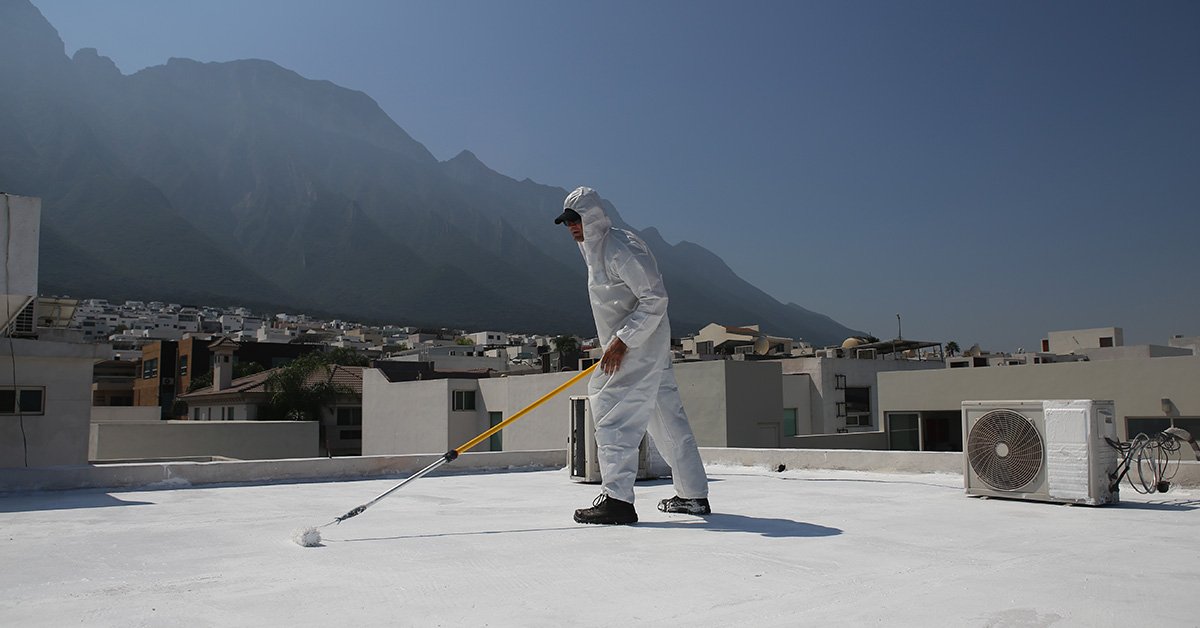
For flat roofs that are prone to ponding water, specialized coatings can prevent the buildup of silt and debris, which often shortens roof life by 1 to 5 years. By incorporating coating inspections into your bi-annual maintenance schedule, you can ensure the protective layer stays intact before extreme weather conditions take a toll.
Partner with Experienced Contractors
Beyond materials and maintenance, choosing the right contractor is crucial for long-term roof performance. A licensed, certified contractor not only protects your investment but also ensures compliance with manufacturer warranties, which often require documented inspections by professionals. Signing an annual service agreement can streamline your budgeting process and guarantee priority scheduling during busy periods, such as after major storms.

For example, an educational center in Northeast Ohio has maintained sections of its roof for over 22 years through consistent professional maintenance, including annual inspections and minor repairs. This approach has extended the roof’s life by an estimated 10 years, freeing up tens of thousands of dollars for other community projects. Companies like Quality Roofing Systems offer tailored maintenance agreements with detailed documentation, including photos and service reports. These records not only help with insurance claims and property resale but also keep warranties valid and your investment secure. To learn more about customized maintenance plans for facilities in Tulsa, Broken Arrow, or Owasso, call (918) 704-3577 or visit www.qualityroofingsystems.net.
Conclusion
Investing in preventative roof care makes financial sense. For every $1 spent on preventative maintenance, you can save up to $5 in future repair costs. Plus, regular upkeep can extend your roof’s lifespan by an impressive 30%–50%. To put it into perspective, a well-maintained roof typically lasts 21 years, compared to just 13 years for one that’s neglected.
Beyond longevity, maintenance offers other key benefits: it protects critical structural components, helps maintain warranties, and can even cut HVAC costs by up to 15% by improving insulation and utilizing reflective coatings. These advantages highlight why professional maintenance is a smart choice.
To get the most out of your roof, it’s essential to work with a licensed contractor who specializes in commercial roofing systems and provides thorough documentation. Quality Roofing Systems offers tailored maintenance programs across Tulsa, Broken Arrow, Owasso, and the surrounding Green Country area. Their certified crews handle everything from routine inspections to emergency repairs, delivering detailed reports and photos to keep your records up-to-date and your investment protected.
Whether your facility is large or small, proactive maintenance is a cost-effective strategy. Call (918) 704-3577 or visit www.qualityroofingsystems.net to schedule your free inspection today.
FAQs
How does regular maintenance help extend the life of a commercial roof?
Keeping your commercial roof in good shape starts with regular maintenance. It helps tackle minor issues – like cracks, seam separations, clogged drains, or flashing problems – before they turn into expensive repairs. Staying on top of these small fixes can also prevent leaks, slow down material wear, and keep your warranty intact.
Consistent upkeep can extend the lifespan of a commercial roof by 30–50% or even longer, depending on the type of roofing system and how well it’s maintained. This not only safeguards your investment but also saves money in the long run by pushing back the need for a complete replacement.
What happens if you skip regular maintenance on a commercial roof?
Skipping regular maintenance on a commercial roof isn’t just risky – it can get expensive fast. Small problems like cracks, clogged drains, or damaged flashing might seem minor at first, but they can quickly spiral into bigger issues like leaks, ponding water, or even structural damage. In fact, neglecting these problems could cut the roof’s lifespan by 30% to 50%. On top of that, skipping routine inspections might void your manufacturer’s warranty, leaving you to foot the bill for costly repairs or even a full replacement.
A poorly maintained roof can also disrupt your business operations. Leaks don’t just create a mess – they can ruin inventory, lead to mold growth, and rack up emergency repair bills. Plus, a neglected roof often means reduced energy efficiency, which can drive up your cooling costs. Worse yet, it might result in code violations or higher insurance premiums.
By working with a reliable provider like Quality Roofing Systems, you can avoid these headaches. They’ll help keep your roof in excellent condition, extend its lifespan, and ensure your business runs without a hitch.
How does regular roof maintenance help lower energy costs?
Regular maintenance is key to keeping your commercial roof in top shape. It helps catch and fix issues like damage, leaks, or wear before they escalate into bigger, more expensive problems. Plus, a well-maintained roof improves insulation and prevents air leaks, which means your indoor temperatures stay more consistent. This takes some pressure off your heating and cooling systems, making them work more efficiently and saving you money on energy bills.
Maintenance also ensures that your roof’s seals and reflective coatings are intact. These coatings play a crucial role in reducing heat absorption during the hotter months, keeping your building cooler and further trimming energy costs.