
Replacing a metal roof isn’t always necessary. Restoration can save you money, extend your roof’s lifespan, and minimize disruptions. If your roof is structurally sound, restoration often costs a fraction of a full replacement, especially in areas like Oklahoma where weather can shorten a roof’s life. Restoration also adds 10–15 years of durability and reduces energy costs with reflective coatings.

Key Signs Your Metal Roof Needs Restoration:
- Rust or Surface Corrosion: Small rust spots can be treated and sealed with coatings.
- Minor Leaks at Seams or Fasteners: Replace loose fasteners and apply sealant to stop leaks.
- Fading or Chalky Coatings: Restore UV protection with new coatings to improve energy efficiency.
- Hail Dents Without Structural Damage: Elastomeric coatings can repair dents and prevent rust.
- Higher Energy Bills: Reflective coatings lower heat absorption, reducing cooling costs.
Restoration is faster, less disruptive, and more affordable than replacement. For example, restoration costs $3–$12 per square foot, compared to $15,000–$30,000 for a full replacement. Regular inspections and timely repairs are essential to catch issues early and avoid costly replacements. If you’re in Oklahoma, companies like Quality Roofing Systems offer free inspections to help you decide the best option for your roof.
7 things Overlooked that causes LEAKS on a Metal Roof – You will be surprised
Signs Your Metal Roof Needs Restoration
Taking action at the first sign of trouble can save you from the hefty expense of a complete roof replacement. Issues with metal roofs often make themselves known long before the situation becomes critical, giving you the chance to address them through restoration.
Routine inspections – ideally in spring and fall – are essential for catching problems early. After severe storms or hail, an immediate check is even more important. Quality Roofing Systems offers free inspections in the Tulsa metro area, helping property owners spot and address issues before they escalate into expensive repairs. Let’s dive into the common warning signs and their potential restoration solutions.
Rust Spots and Surface Corrosion
Rust often begins subtly, showing up as small brown specks or slight discoloration on metal panels. As Mazzamuto Construction points out:
"Most early rust looks like small brown flecks. Over time, it may become flaky or patchy. If you notice discoloration or chipped paint, inspect that area closely".

Factors like high humidity, heavy rainfall, and sudden temperature changes can weaken a roof’s protective coatings, allowing moisture to reach the bare metal. Once oxidation starts, rust can worsen, becoming flaky and eventually creating pits that lead to leaks.
For minor rust, you can remove loose flakes with a wire brush, clean the area thoroughly, and apply a rust-inhibiting primer before recoating. If rust is more widespread, elastomeric coatings offer a solution by sealing and protecting the surface without requiring a full tear-off. During inspections, it’s also crucial to differentiate between rust and algae growth – rust appears reddish-brown, while algae forms dark streaks.
Minor Leaks Around Seams or Fasteners
Leaks often start at the seams and fasteners – the weakest points of any metal roof. Over time, the natural expansion and contraction of metal panels can loosen fasteners or cause seams to separate.
"Over time, the fasteners with their rubber washers might back out, leaving holes or gaps between the metal and the washer. This opens the roof up to water leaks." – Long Home

Rubber washers on fasteners can crack as they age, leading to leaks that may show up as water stains or mold in the attic. Seams are another common problem area, particularly if the roof was poorly installed or if the original sealant has failed. A simple "light test" in the attic – where daylight filtering through indicates gaps – can help identify these issues early.
To fix these problems, start by checking the tension of fasteners. Replace any missing or loose screws with new ones that have fresh rubber washers, taking care not to overtighten. For seams, clean the area with a wire brush to remove debris or rust, then apply a high-quality elastomeric sealant designed for metal roofs. Prompt attention to these areas can prevent further damage.
Fading or Chalky Protective Coatings
If your roof’s coating looks faded or feels chalky, it’s a sign that UV exposure is breaking down the protective layer. This not only affects the roof’s appearance but also increases heat absorption, leading to higher cooling costs. To check for chalking, swipe a panel with your finger – if a white residue appears, the coating is deteriorating.

As Sheffield Metals explains:
"In the end, nothing will keep outdoor metal panels safe from chalking and fading forever. But that doesn’t mean there aren’t ways to stretch out the life of a metal roof".
To restore the coating, start by power washing the roof to remove residue, dirt, and oxidation. Then, apply a metal-specific primer before adding a durable topcoat. High-performance coatings made with PVDF or SMP resins are better suited to resist UV damage. For example, PVDF (Kynar 500®) coatings often come with warranties for up to 40 years, while lower-grade polyester coatings may only last about 10 years. Restoring these coatings can significantly extend your roof’s lifespan without the cost of replacement.
Hail Dents Without Structural Damage
In areas like Oklahoma, hailstorms are a common occurrence, and they often leave behind dents on metal roofs. While these dents may damage the protective coating, they usually don’t compromise the structural integrity of the roof. However, chipped or cracked coatings expose the bare metal underneath, creating the perfect conditions for rust.
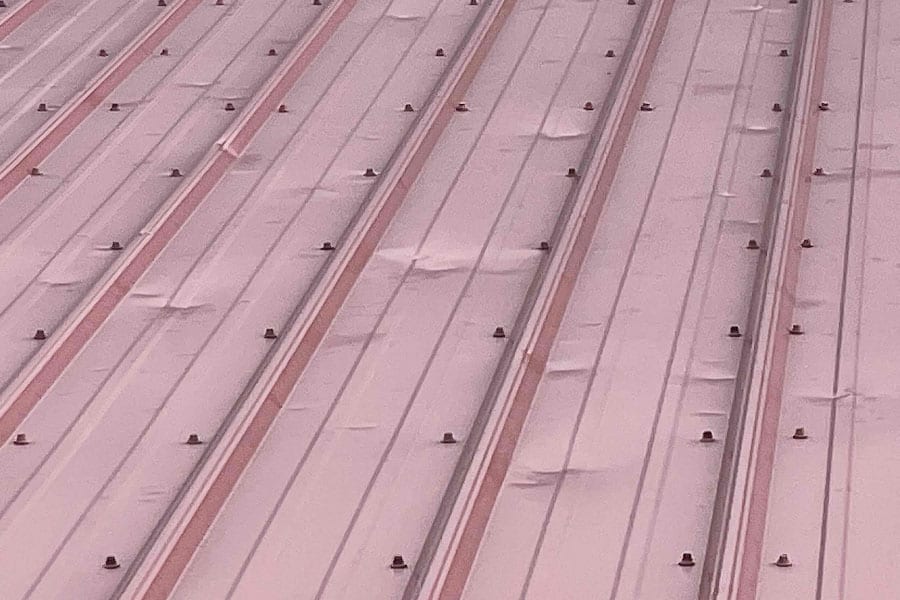
After a hailstorm, it’s wise to schedule an inspection to assess the extent of the damage. Quality Roofing Systems provides free storm damage assessments and detailed reports to help property owners understand their options. For roofs with dents but no structural damage, elastomeric coatings can seal and protect the surface, preventing future corrosion.
Rising Energy Costs from Heat Buildup
When a roof’s protective coatings deteriorate, it loses its ability to reflect sunlight, causing the metal to absorb more heat. This not only raises interior temperatures but also drives up cooling costs. You might first notice this issue through higher-than-usual utility bills.

Restoration coatings designed for energy efficiency can lower roof surface temperatures by up to 30%, reducing cooling costs significantly. These advanced coatings are built to endure intense UV exposure while maintaining their reflective properties. Proper ventilation also plays a key role in keeping humidity levels low, which helps prevent coating degradation. Together, these measures can bring down energy expenses while extending the life of your roof.
Restoration vs. Replacement: A Comparison
When you notice signs of wear or damage on your metal roof, the next step is deciding between restoration and replacement. The choice depends on factors like the roof’s structural condition, your budget, and how long you expect the roof to last. If the structure is still in good shape, restoration could be a more practical and cost-effective solution.
Restoration works best when the panels and decking remain solid and intact. If rust hasn’t penetrated the metal or damaged the underlying structure, restoration can extend the roof’s lifespan by 10 to 20 years at a much lower cost than replacing it entirely. However, if the decking is soft, sagging, or the metal has corroded through, replacement becomes the only viable option. The table below highlights the main differences between restoration and replacement.
Construction writer Dawn Killough offers this perspective:
"It’s usually less expensive to restore a metal roof than replace it. Restoration also doesn’t affect the occupants of the building as much, and it doesn’t require exposing the structure to the elements".
This makes restoration especially appealing for commercial buildings where downtime or disruptions could be costly.
Comparison Table: Restoration vs. Replacement
| Feature | Metal Roof Restoration | Metal Roof Replacement |
|---|---|---|
| Cost | $3–$12 per sq. ft. | $15,000–$30,000+ total |
| Time Required | Days to complete | Weeks |
| Business Impact | Minimal disruption; no closure needed | High disruption; noise and construction |
| Environmental Impact | Eco-friendly; reuses existing materials | High waste; old materials sent to landfills |
| Lifespan Added | 10–20 years | 30–50 years (new roof cycle) |
| Energy Efficiency | High via reflective coatings | Depends on new materials chosen |
| Structural Condition | Requires a sound structure | Fixes underlying structural issues |

For property owners in Oklahoma, insurance can also influence the decision. If storm damage is widespread and your policy includes Replacement Cost Value (RCV) coverage, a full replacement might be a financially viable option. Companies like Quality Roofing Systems offer free storm damage assessments and detailed reports to help you navigate your options and coordinate with your insurance provider when necessary.
sbb-itb-6a78eb0
Metal Roof Restoration Solutions
Once you’ve identified that your metal roof is suitable for restoration, the next step is understanding the process. At Quality Roofing Systems, proven methods are used to repair damage, seal leaks, and protect roofs against Oklahoma’s challenging weather. These techniques not only address current issues but also help lower long-term costs, extending the roof’s lifespan by 20 to 30 years while reducing energy expenses and preventing future problems.
Elastomeric Coatings for Long-Lasting Protection
Elastomeric coatings transform aging metal into a seamless, flexible barrier capable of withstanding temperature extremes. Jeff from Quality Roofing explains:
"We essentially create a water-tight elastomeric membrane that encases your old worn out metal roof".

The process begins with a pressure wash to remove dirt and contaminants. Fasteners are then secured, and any bare metal is primed to halt corrosion and prepare the surface for coating. Two coats of elastomeric coating are applied, with the second coat applied perpendicular to the first after 24–48 hours. This creates a reflective, flexible membrane that not only regulates temperature but also extends the roof’s life by 20–30 years. The bright white reflective coating helps deflect sunlight, easing the strain on HVAC systems during Oklahoma’s sweltering summers. As Grant notes:
"It’ll keep the ambient temperature within the warehouse or shop down to a controlled temperature. It also adds a shelf life of another 20 to 30 years to the life of the roof".
The polymer binders in these coatings – whether acrylic, silicone, or polyurethane – allow the membrane to stretch and recover during extreme temperature changes without cracking. For areas requiring more specific attention, specialized sealants can be used to address critical points where elastomeric coatings might not be enough.
Metal Roof Sealants for Precise Repairs
Sealants are ideal for addressing specific trouble spots like seams, fasteners, and small leaks. These products create a watertight barrier that remains flexible, accommodating the natural expansion and contraction of metal roofs. The process includes applying flashing sealant to seams and fasteners, reinforcing it with a layer of polyester fabric, and then adding a second coat of sealant to ensure a durable, watertight finish. This method quickly stops minor leaks and prevents further structural damage.

It’s wise for property owners to schedule annual roof inspections and check for damage after major Oklahoma storms. Catching deteriorated sealants early can save significant repair costs. For additional energy savings, consider pairing sealants with advanced reflective coatings designed for Oklahoma’s climate.
Energy-Efficient Coatings for Oklahoma’s Climate
In Oklahoma’s often intense heat, reflective coatings can dramatically lower cooling costs. White elastomeric coatings reflect solar radiation, helping to keep indoor temperatures cooler. This "cool roof" technology reduces the load on air conditioning systems, particularly in large commercial buildings like warehouses. Compared to a full roof replacement, restoration can cut costs by as much as 50%.

Reflective coatings can lower roof surface temperatures by up to 30%, leading to significant energy savings. Energy Star–approved systems from manufacturers like Roof-Tek, Johns Manville, and Polyglass offer a range of options, including cost-effective acrylics, low-slope silicone, and impact-resistant polyurethanes. These coatings are applied after a thorough pressure wash and adhesion testing to ensure proper application and long-term performance.
Conclusion
If your metal roof is starting to show signs of wear but is still structurally sound, restoration can be a smart and cost-efficient choice. While replacing a roof can set you back thousands of dollars, restoring it costs just a fraction and still provides reliable protection. Plus, you’ll sidestep disposal fees, avoid the hassle of a complete tear-down, and keep your home or business running smoothly during the process.
Using reflective elastomeric coatings can lower roof temperatures by up to 30%, reducing the strain on your HVAC system and cutting down energy bills. These coatings not only improve energy efficiency but also add 10 to 15 years to your roof’s lifespan.
The key to maximizing these benefits lies in timely maintenance. Quick repairs can stop small problems from turning into major structural issues. Regular inspections – especially after severe weather – help catch and address damage early, saving you from costly surprises down the line.
For property owners in Tulsa, Sand Springs, Bixby, Broken Arrow, Owasso, Muskogee, and Bartlesville, Quality Roofing Systems offers free roof inspections and tailored recommendations. Their licensed professionals thoroughly evaluate every part of your roof, from fasteners to drainage systems, to determine whether restoration or replacement is the best option for you. To schedule your free inspection and protect your roof, call Quality Roofing Systems at (918) 704-3577 or visit their website at www.qualityroofingsystems.net.
FAQs
What are the financial advantages of restoring a metal roof instead of replacing it?
Restoring a metal roof is a smart way to save money compared to a full replacement, often costing 30–50% less. Beyond the financial savings, this process can extend the roof’s lifespan by an additional 10–20 years, giving you more value over time.
Restoration also comes with energy-saving perks. By enhancing insulation and reflectivity, it helps lower heating and cooling costs. Plus, it cuts down on labor and material waste, making it a practical and eco-conscious choice for prolonging the life of your roof.
How can elastomeric coatings make your metal roof more energy-efficient?
Elastomeric coatings can make a big difference in energy efficiency by creating a reflective, white surface on metal roofs. This surface bounces back a large portion of the sun’s rays, which lowers the roof’s temperature and keeps excess heat from seeping into the building. The result? Your air conditioning system works less, which can translate into noticeable savings on cooling bills.
Beyond that, the coating creates a seamless, insulating layer that seals up small gaps around fasteners and flashings. This reduces air leaks and cuts down on thermal bridging, helping to keep indoor temperatures steady. With less need for heating or cooling, you can save on energy costs over time. Plus, the coating adds durability to your roof, potentially extending its lifespan and making it a smart long-term investment.
What should I do if I see rust or leaks on my metal roof?
If you spot rust spots or leaks on your metal roof, the first step is to inspect the area thoroughly to pinpoint the issue. Look for signs like visible rust, loose or corroded fasteners, damaged flashing, or gaps where water might be seeping through. Don’t forget to check gutters and low-lying areas for standing water, as this can worsen the damage over time.
After identifying the problem, it’s time to clean and treat the affected area. Start by removing loose rust using a wire brush or sandpaper. Then, wash the surface with a mild detergent and allow it to dry completely. Once dry, apply a rust-inhibiting primer to protect the metal, followed by a durable roof coating such as elastomeric or spray foam. This will seal the surface and help prevent future moisture damage. If there are leaks, use a roofing sealant to fill gaps, tighten any loose fasteners, and repair or replace damaged flashing as needed.
For added peace of mind and long-term protection, think about scheduling a professional roof restoration service. These services often include sealing, coating, and other treatments designed to extend your roof’s life and potentially save you from the expense of a full roof replacement.