
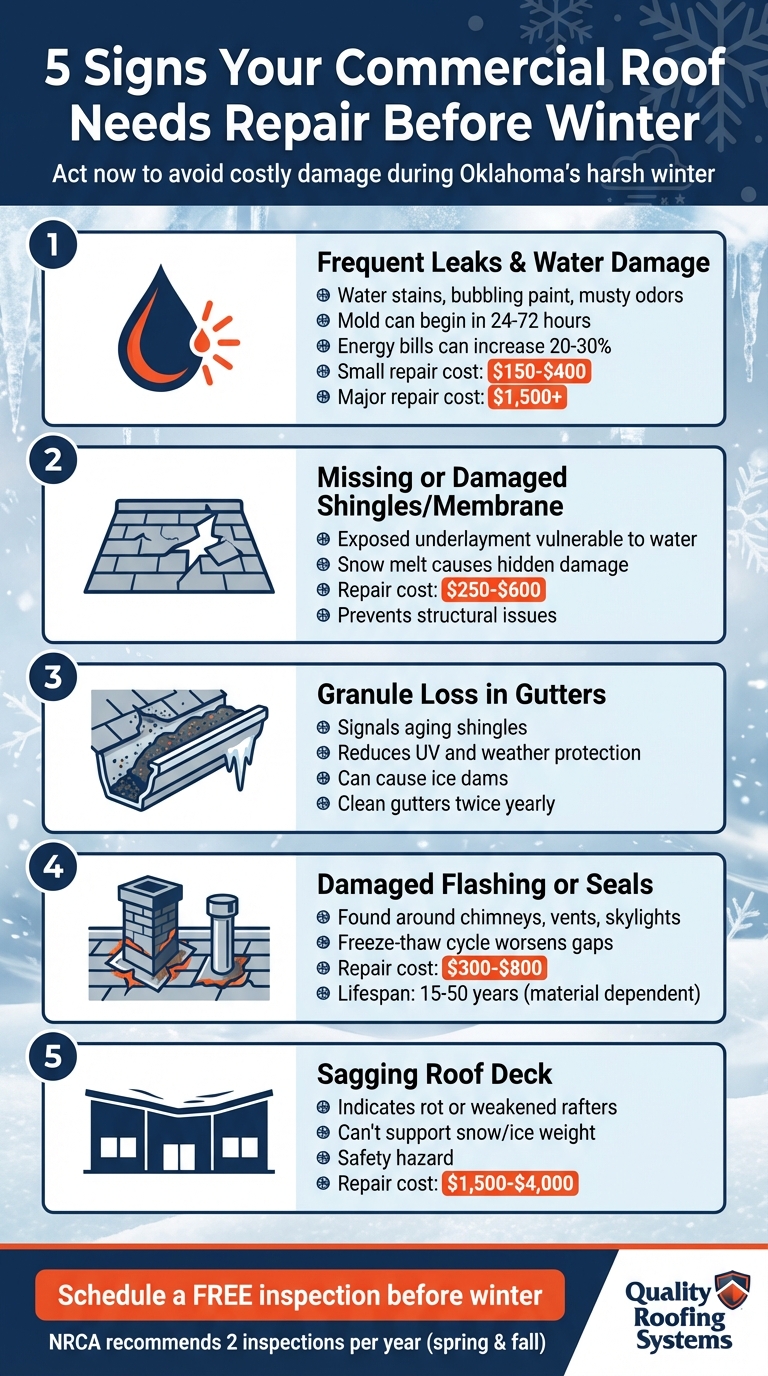
Oklahoma winters are tough on commercial roofs. Ignoring small issues now can lead to expensive repairs, structural damage, or even roof collapse during ice storms, snow, and freezing temperatures. Acting early helps protect your building and saves money. Here are five clear signs your roof needs attention before winter hits:

- Frequent leaks or water damage: Look for water stains, bubbling paint, or musty odors. Small leaks can worsen with freezing temperatures, leading to mold, rotting wood, and higher heating costs.
- Missing or damaged shingles or membrane sections: Exposed areas allow water to seep in, causing structural issues. Repairs are easier and cheaper before snow arrives.
- Granule loss in gutters: Granules protect shingles from UV rays and water. Their loss signals aging shingles, which are less effective against winter weather.
- Damaged flashing or seals: Cracked or rusted flashing around vents and chimneys can lead to leaks. Winter’s freeze-thaw cycle can make these gaps worse.
- Sagging roof deck or structural weakness: A sagging roof can’t handle the weight of snow and ice, posing serious safety risks.
Why act now? Repairs are simpler and less costly before winter. Schedule a professional inspection to address these issues early and avoid major headaches later.
5 Warning Signs Your Commercial Roof Needs Winter Repairs
🏢🛠️ Spot the Signs: Know When Your Commercial Roof Needs Repair
1. Frequent Leaks and Water Damage
Water leaks are a glaring sign that your commercial roof might be on its last legs. If you’ve noticed water stains on ceilings, dripping water, bubbling paint, or even a musty smell inside your building, it’s likely that water has made its way through the roof, damaging the structure underneath.
When temperatures drop below freezing, any trapped water expands, making cracks worse and leaks more severe. Ice dams are another headache – they form when clogged gutters stop melting snow from draining properly. This forces water back under your roofing materials and into the building, speeding up roof damage. Experts have observed this phenomenon repeatedly in the field.

"Even a small leak can lead to significant structural damage in as little as 48 hours. Mold growth can begin within 24 to 72 hours, and if left unattended, water can compromise insulation, electrical systems and your roof deck." – Protect Preserve Roofing
The longer water damage is left unchecked, the worse it gets. Within weeks, you could be dealing with rotting wood, mold, and warped structures – problems that come with soaring repair bills. Wet insulation is another hidden cost. Once it’s compromised, it becomes far less effective, forcing your heating system to work overtime. This can lead to energy bills jumping by 20–30% during the winter months.
Addressing minor leaks early can save you money. Small repairs usually cost between $150 and $400, but if you let the problem fester, major repairs can climb beyond $1,500. Acting quickly isn’t just smart – it’s essential to protect your building and keep costs under control.
2. Missing or Damaged Shingles or Membrane Sections
When shingles or membrane sections on your roof are damaged, missing, or dislodged, your roof’s underlayment and decking are left exposed to the elements. This creates vulnerable spots where water can easily seep through, especially during the harsh winter months.
Much like leaks, missing or damaged roofing materials can leave your home at the mercy of winter weather. As snow melts on the roof, the resulting water can find its way through cracks and gaps, often going unnoticed until stains or more severe damage appear.

Stefan Mach, Owner of Frederick Roof Repair, highlights the risks: "Letting shingles remain off of the roof during the winter is a good way to turn a minor repair into a major one. Once snow piles on the roof, repairs become extremely difficult and snow melt can bring large quantities of water to bear upon drywall adding inside damage to outside damage". Addressing these issues before snowfall is crucial to avoid escalating repair costs and additional damage.
Water intrusion doesn’t just harm the roof itself – it can also compromise the roof deck and insulation. Small problems, such as popped nails or adhesive strips that have failed, can snowball into major structural issues, potentially leading to a sagging roof.
The cost of repairing damaged shingles, typically ranging from $250 to $600, is far more manageable than dealing with water-damaged interiors or structural repairs. Regular inspections, particularly after storms, can help you spot and fix these problems early, preventing minor issues from turning into winter emergencies.
3. Granule Loss or Deterioration in Gutters
Finding a buildup of coarse granules in your gutters is more than just a cleaning hassle – it’s a warning sign. These granules are part of the protective coating on asphalt shingles. When they start washing away, it means your roof is aging and losing its ability to defend against the elements.
Granules do more than just add color to your roof. They act as a shield, protecting against UV rays, fire, rain, and hail. As Standard Roofing points out:

"These granules serve an essential function in protecting your roof from UV rays and providing fire resistance".
When granules are lost, shingles become brittle and less effective at standing up to winter conditions like snow, ice, and strong winds. What might seem like minor wear can quickly turn into major water damage inside your home or building. Much like leaks or missing shingles, granule loss is a clear signal that your roof needs attention – especially before winter sets in.
There’s another issue to watch out for during colder months: granules clogging your gutters. This can lead to ice dams, which form when water can’t drain properly, freezes, and creates a barrier. These ice dams force melting snow to seep under your shingles, causing even more damage.
The solution is simple: clean your gutters at least twice a year, with one cleaning scheduled before winter. While you’re at it, consider a roof inspection. If you’re noticing a large amount of granules in your gutters, it’s a good idea to have a professional check if repairs or even a replacement are necessary before the first snowfall. Addressing granule loss early can save you from costly structural damage and the frustration of dealing with insurance claims, especially since wear-and-tear damage is often not covered by standard policies.
sbb-itb-6a78eb0
4. Damaged or Faulty Flashing and Seals
Flashing, those thin metal strips found around chimneys, skylights, vents, and roof valleys, plays a crucial role in sealing off vulnerable areas of your roof. But when flashing cracks, rusts, or separates, it creates an easy path for winter precipitation to sneak into your building.
The freeze-thaw cycle makes things worse. Water seeps into small openings, freezes, and expands, turning tiny gaps into significant leaks over time. What starts as a minor issue can quickly spiral into a much bigger problem.

Watch for telltale signs of trouble, like rust, flaking metal, curling edges, or visible gaps in the flashing. Water stains or musty odors near chimneys and skylights are also red flags. Often, poor installation is to blame for these failures.
Addressing flashing problems early can save you from costly repairs later. Fixing flashing typically costs between $300 and $800. A professional inspection – especially one that uses thermal scanning – can uncover hidden issues. Minor damage might just need resealing, but severe deterioration could require full replacement.
Flashing doesn’t last forever, and its lifespan depends on the material. Aluminum lasts about 15–20 years, galvanized steel can go 20–30 years, and copper can hold up for over 50 years. If your flashing is nearing the end of its lifespan or shows significant wear, replacing it before winter hits is a smart move to prevent small issues from becoming major headaches.
5. Sagging Roof Deck or Structural Weakness
A sagging roof isn’t just an eyesore – it’s a serious safety hazard, especially with winter’s heavy snow and ice adding more pressure. If you notice dips, curves, or waves along your roofline, it’s often a sign of deeper issues like rot or weakened rafters. These warning signs highlight potential structural problems that need immediate attention.

"A sagging roof is one of the most serious signs your roof needs immediate attention. It can indicate rot, weakened rafters, or structural failure beneath the surface." – Reimagine Roofing
Sagging roofs are frequently caused by water damage from poor drainage, the weight of accumulated debris, undersized rafters, or simply the wear and tear of an aging structure. Winter conditions can make things worse – snow and ice can add thousands of pounds to an already compromised roof.
To catch these issues early, take a step back and inspect your roofline – it should look straight and level. Inside your attic, gently press on the roof decking; soft spots are a major warning sign. Also, watch for sagging rafters, water stains, or mold growth, as these all point to moisture weakening the structure. If the sagging measures about 0.25 inches per 10 feet, it’s a clear red flag.
For a thorough evaluation, hire a licensed roofing contractor. They can use tools like infrared scanners to detect hidden moisture and weak areas. While repairs may cost between $1,500 and $4,000, that’s a fraction of what you’d pay if the roof were to collapse.
Why Act Now with Quality Roofing Systems
Oklahoma winters are tough on roofs. Ice storms, high winds, heavy snow, and sudden temperature swings can quickly turn a minor roof problem into a major disaster. Ignoring small issues could lead to interior leaks, ice dams, and even more costly damage.
The National Roofing Contractors Association advises homeowners to get their roofs inspected twice a year – once in the spring and again in the fall. Tackling repairs before winter hits is especially important. Small problems, like loose flashing or tiny leaks, can escalate during freeze-thaw cycles. Taking care of these issues early not only saves money but also ensures your roof is ready for the harsh months ahead.

To make this easier, Quality Roofing Systems offers free roof inspections for property owners and managers in the Tulsa area. Their team, with over 17 years of experience, knows Oklahoma’s unpredictable weather – scorching summers and freezing winters alike – and how it impacts commercial roofing systems. They specialize in TPO, metal, and flat roofing solutions designed to handle these extreme conditions.
A worn-out roof doesn’t just let in water; it also makes your HVAC system work harder. Weak areas around vents, skylights, and HVAC units are prime spots for water to sneak in during winter storms [24, 29, 61]. The team at Quality Roofing Systems addresses these vulnerabilities, from clearing debris-clogged drainage systems to fixing loose seams on flat roofs that trap water during freeze-thaw cycles.
Don’t wait for the first ice storm to expose your roof’s weaknesses. Schedule a free inspection now to ensure your roof is ready for Oklahoma’s winter. Quality Roofing Systems provides dependable repairs and backs them with comprehensive warranties.
Conclusion
Your roof is showing clear signs of wear and tear that could lead to costly repairs once Oklahoma’s harsh winter weather sets in. Freezing temperatures, heavy snow, and ice storms can quickly turn minor issues into major problems.
For example, small leaks can escalate into full roof replacements due to the freeze-thaw cycle. On top of that, cold weather not only complicates repairs but also drives up the cost of emergency services.
"A professional inspection can uncover small problems before they become expensive emergencies." – Next Phase Roofing
The best way to avoid these costly scenarios? Schedule a professional roof inspection now, before winter arrives. A certified team can pinpoint vulnerabilities and address them proactively, saving you both time and money.
Don’t wait until the first ice storm reveals your roof’s weaknesses. Contact Quality Roofing Systems today for a free inspection and ensure your commercial roof is ready to handle whatever winter throws its way.
FAQs
What could happen if I don’t repair my commercial roof before winter?
Neglecting to fix your commercial roof before winter sets in can spell trouble. Water leaks might sneak in, causing interior damage, encouraging mold growth, and potentially ruining valuable equipment or inventory inside your building. Over time, structural problems like sagging or weakened areas can escalate, leading to expensive repairs – or, in the worst case, a partial roof collapse.
On top of that, a damaged roof can mean skyrocketing energy bills. Poor insulation forces your heating system to work overtime just to keep the building warm. And when winter storms hit, the added weight of snow and ice can push an already compromised roof to its breaking point. Tackling these repairs before winter arrives is a smart move to safeguard your property and avoid costly, last-minute emergencies.
What does granule buildup in gutters mean for your roof’s condition?
Granules accumulating in your gutters often indicate that your shingles are starting to wear out. These granules are essential because they shield your roof from harmful UV rays, water damage, and even hail. Once they begin to break down, your roof is left more exposed to potential leaks and early aging.
If this issue is overlooked, it can lead to expensive repairs, especially as winter approaches. Freezing temperatures and strong winds can aggravate any existing roof problems. Keeping an eye on granule loss and addressing it quickly can help protect your roof and keep it in good shape for longer.
Why should damaged roof flashing be repaired before winter?
Repairing damaged flashing before winter hits is a must if you want to protect your property from water damage caused by rain, snow, and freezing temperatures. Flashing serves as a critical barrier around roof joints – like those near vents, chimneys, and skylights – designed to keep water out.
When flashing is damaged, it opens the door for water to seep into your roof. During the colder months, that water can freeze, leading to leaks, mold, and even serious structural issues. Taking care of flashing repairs in a timely manner ensures your roof stays watertight and your property remains safe throughout the harsh winter season.